Aston Martin DBX S in Saudi Arabia: the Performance-Luxury SUV Guide
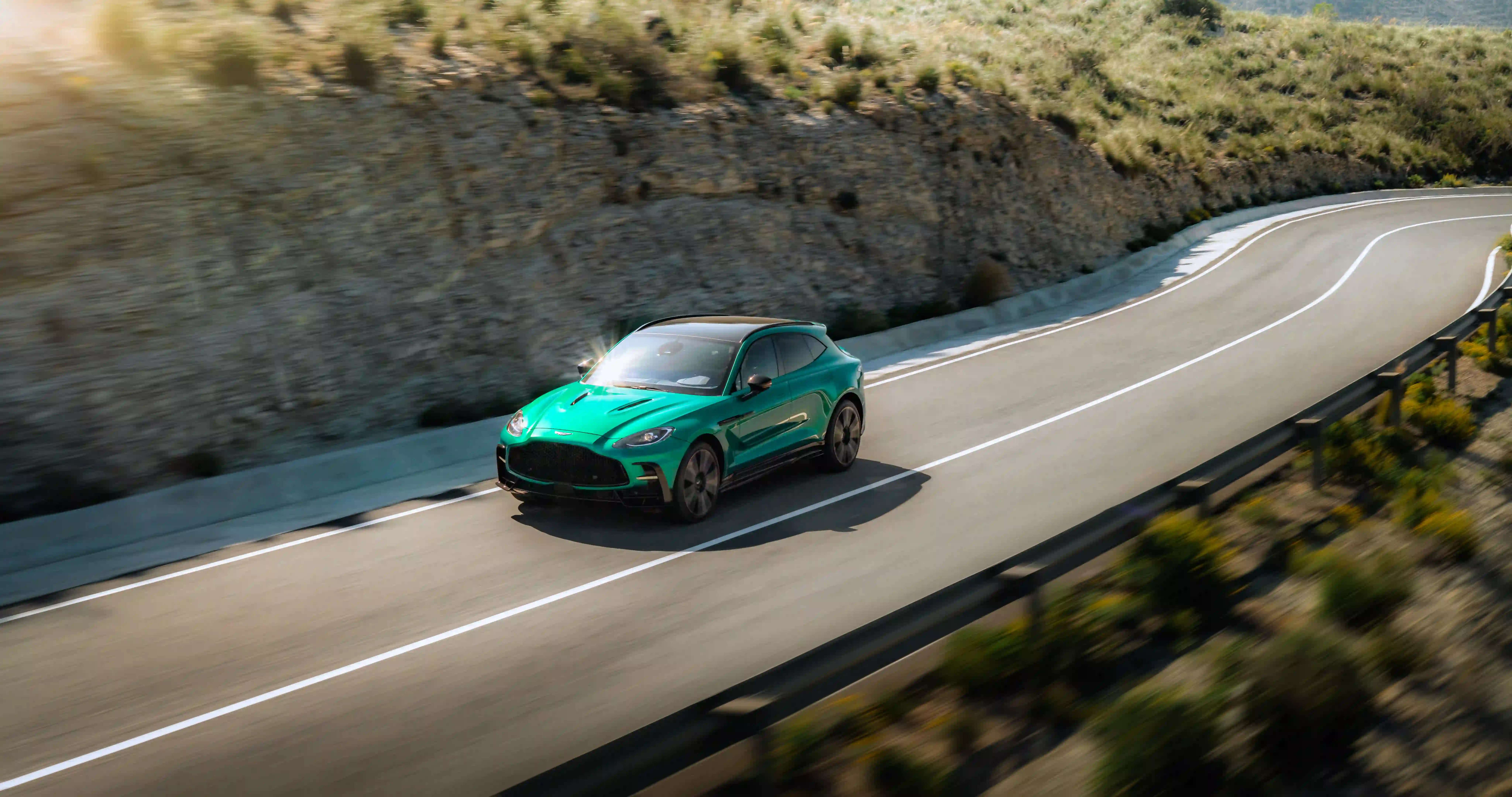
Table of Contents
The Aston Martin DBX S is the most powerful production SUV Aston Martin has built. It produces 727 PS and 900 Nm from a 4.0-litre twin-turbo V8, reaches 100 km/h in 3.3 seconds and tops out at 310 km/h. It seats five, carries 638 litres of luggage and is available in Saudi Arabia through the authorised dealer.
A 727 PS SUV ought to be a compromise wearing a very good badge. This one is not. The Aston Martin DBX S will carry five people and their luggage to Jeddah on a Thursday afternoon, then hand you the road back in a way no family car has any business doing.
That is the proposition in a sentence. The Aston Martin DBX proved the marque could build something practical without losing its character. The S keeps every bit of the practicality and sharpens almost everything underneath it.
What follows is what the car produces, how it behaves on Saudi roads, and what a year of ownership in the Kingdom actually asks of you.
What is the Aston Martin DBX S, and how does it compare with the DBX707?
The DBX S is the flagship version of the Aston Martin DBX, and the DBX707 sits alongside it. Both are current cars, both are sold new through the authorised dealer, and both are built on the same architecture. The S carries 727 PS and takes weight out of the places that change how a car turns rather than how it looks on a specification sheet. The DBX707 carries the 707 PS that named it.
Which of the two you want depends on what you are asking the car to do, and the honest answer is that most people would be happy in either. The DBX707 is the complete performance SUV and asks you to give up nothing to own it. The S takes the same car and commits harder to one side of its character. That is a difference of temperament rather than of rank, and it is settled far better from the driver's seat than from a specification sheet.
Three things separate the S from the DBX707. Output rises by 20 PS. A set of weight reductions removes up to 47 kilograms, and where that weight comes from matters far more than the total: an optional carbon fibre roof takes 18 kilograms out of the highest point in the structure, and magnesium wheels strip up to 19 kilograms of unsprung mass off the corners. Take weight out n has built. It produces 727 PS and 900 Nm from a 4.0-litre twin-turbo V8, reaches 100 km/h in 3.3 seconds and tops out at 310 km/h. It seats five, carries 638 litres of luggage and is available in Saudi Arabia through the authorised dealer.
Then there is the exhaust. The quad-stacked tailpipes are the first thing anyone notices standing behind the car, but the real change reaches you before you have seen them. Start the S cold in a basement car park and it announces itself without apology. The DBX707 is the more discreet of the two, deliberately so, and for a good number of owners that restraint is the reason they choose it.
None of this turns the DBX S into a track car, and it was never asked to. It is still a five-seat luxury SUV with a boot you can genuinely fill. It simply moves harder, resists running wide at the nose, and sounds considerably more serious about both.
Aston Martin DBX S performance and drivetrain
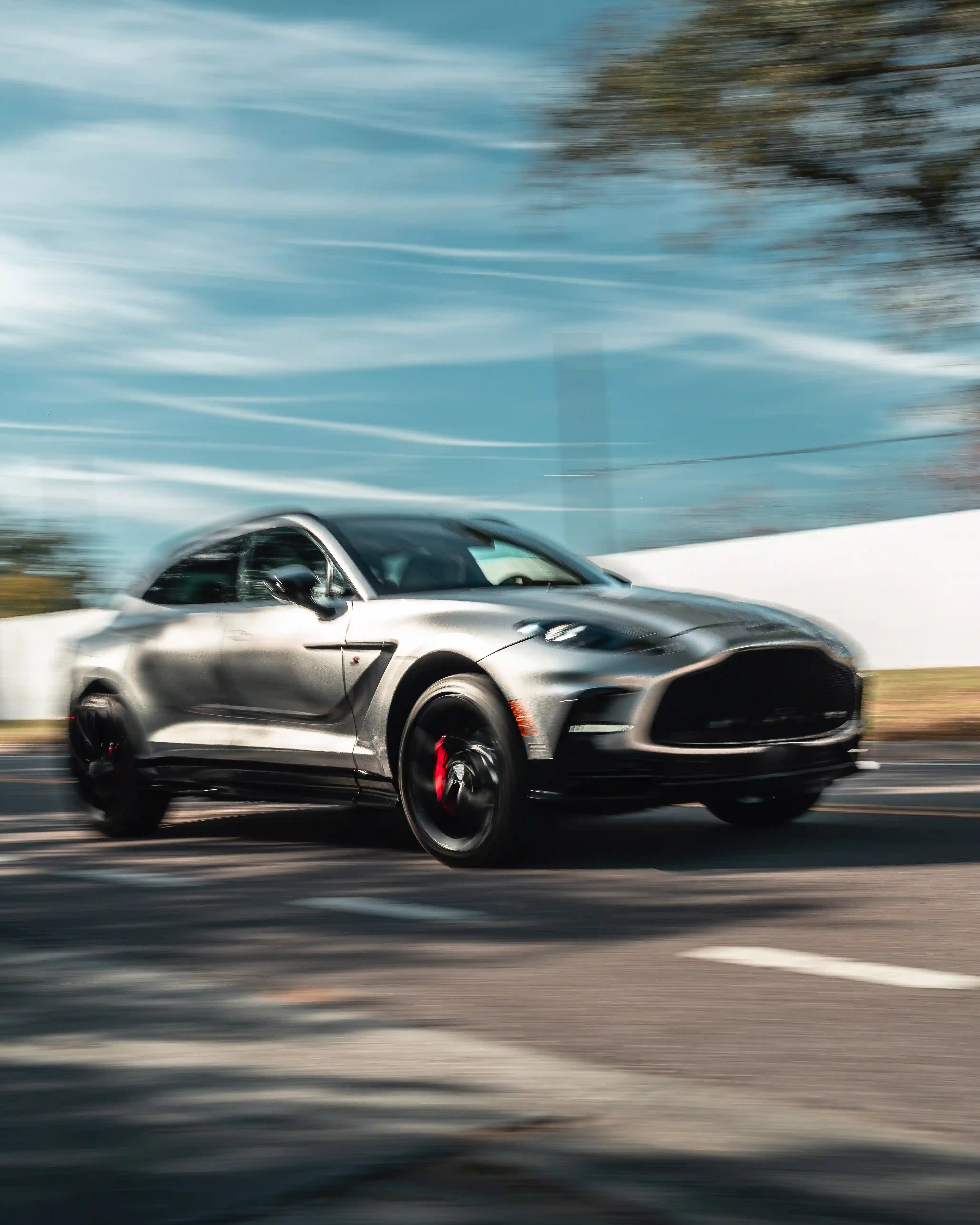
The DBX S uses the same architecture as the rest of the DBX family: a front-mounted twin-turbo V8, a nine-speed wet-clutch automatic and all-wheel drive with an electronic limited-slip rear differential. What changed is calibration, cooling and mass.
That trio matters more here than raw output does. Any manufacturer can print a power figure. In a Saudi August the useful question is whether the car is still making that power at two in the afternoon with the air conditioning fighting for its life, and the answer to that is written in cooling, not horsepower.
DBX S engine power and 0-100 km/h time
The engine is a 4.0-litre twin-turbocharged V8. Aston Martin quotes 727 PS, which is 717 bhp, and 900 Nm of torque. The figure that shapes the drive, though, is not peak power. It is that the torque arrives early and then simply stays, which is why the car feels immediate at a quarter throttle pulling out of a junction rather than only when you have found the space to extend it.
Drive goes to all four wheels through a nine-speed wet-clutch automatic. The wet clutch earns its keep in the Gulf. It tolerates repeated heat cycling far better than a dry unit, which is precisely what a Riyadh commute inflicts on a gearbox in July: crawl, surge, crawl again, for an hour. Torque moves front to rear actively, and the electronic rear differential shuffles it across the axle to pull the car through a corner instead of letting it wash wide.
Aston Martin's DBX S headline figures:
- Engine: 4.0-litre twin-turbocharged V8
- Maximum power: 727 PS (717 bhp)
- Maximum torque: 900 Nm
- 0 to 100 km/h: 3.3 seconds
- Maximum speed: 310 km/h
- Transmission: nine-speed wet-clutch automatic
- Drive: all-wheel drive with electronic limited-slip rear differential
- Weight saving over the DBX707: up to 47 kg
How the DBX S rides on Saudi roads
Numbers describe a car badly. Roads describe it properly, so here are three.
Take the highway out of Riyadh with the city dropping away behind you and the DBX S settles into something close to serenity. Triple-chamber air suspension and adaptive damping hold it long and flat, the steering lightens, and three hours pass without the car ever feeling like work. Drive modes run from a genuinely soft GT setting through to Sport Plus, which firms the dampers, sharpens the throttle and hangs on to gears. Most owners will leave it in GT. Very few will feel short-changed by that.
In traffic it is gentler than 727 PS has any right to be. The gearbox does not hunt at low speed. Visibility is good for a car this quick. And the air suspension rises on request, which is the whole difference between clearing a compound entrance and hearing something costly make contact with it. Find that button in the first week rather than the kerb.
Then there is the descent out of Taif, where the road stops being straight and the weight saving stops being a bullet point. Turn in and the nose goes where you put it, with less delay and less body movement than the DBX707 shows on the same road. Forty-seven kilograms is nothing on a weighbridge. Taken out of the roof and the wheels, it is enough to change the first quarter-second of every corner. The difference is not theatrical. It is consistent, corner after corner, and it is the kind of change an owner registers in the second week rather than the first bend.
Inside the DBX S cabin and boot
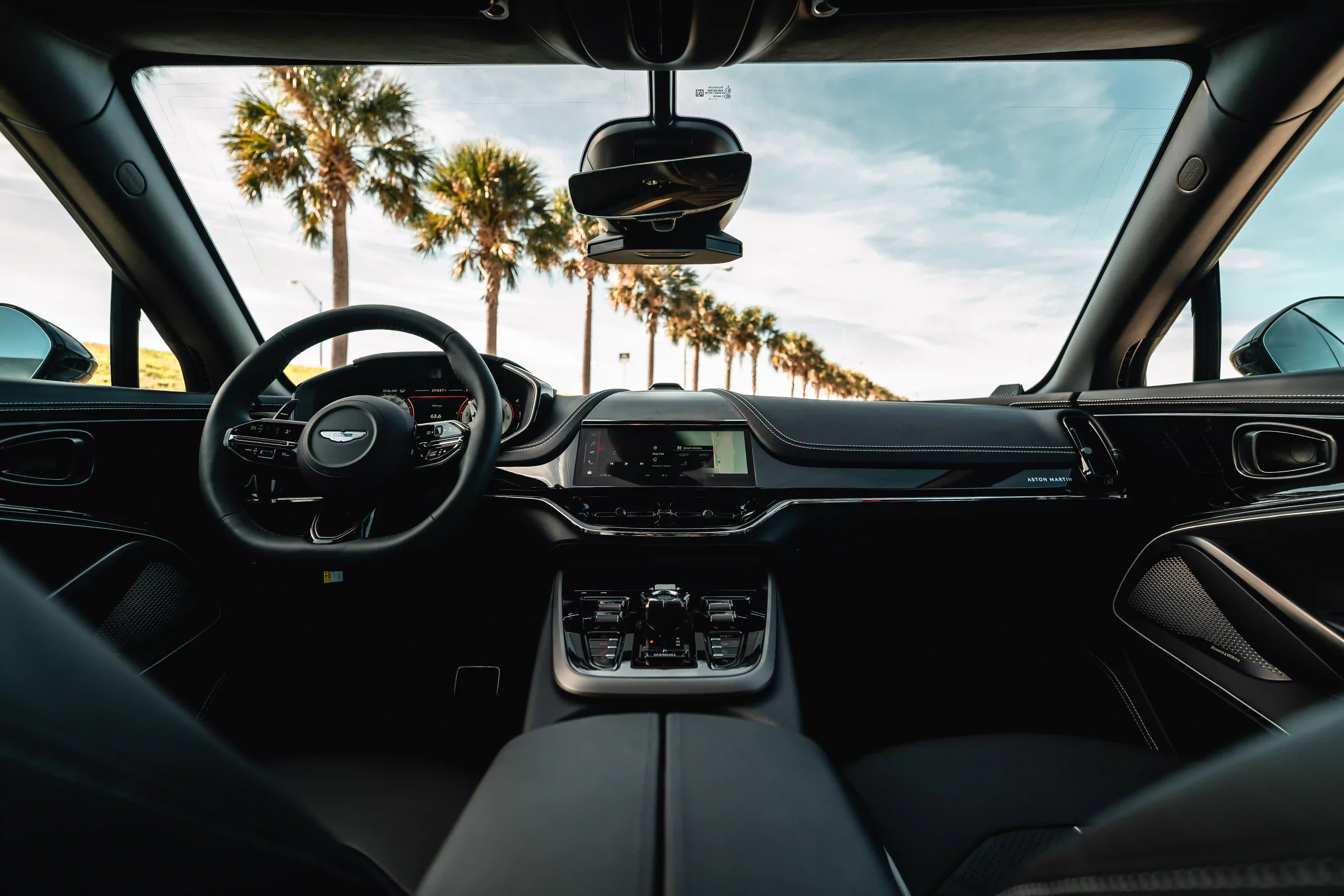
The DBX S looks like a DBX that has been training rather than a different car altogether. Every exterior change is doing a job. A carbon fibre louvre section in the bonnet, a wider front aperture feeding the coolers, the quad exhaust, and optional 23-inch wheels that fill the arches without wrecking the ride.
Inside, what matters is everything that was not given up. Five seats, a full-size rear bench, and the same 638 litres behind it. A family of five and their luggage still fit, which is the entire argument for a performance SUV over a sports car, and the S declines to quietly undermine it.
Pull the door shut and the cabin makes its case in materials rather than numbers. Knurled metal under your fingertips on the console. Alcantara where your hands actually land. A rotary controller that has survived the touchscreen era for the unglamorous reason that it still works when you are driving and looking somewhere else.
The specification behind that impression:
- Five seats, with a rear bench rather than individual chairs, and a 638-litre luggage compartment
- Sport seats with a choice of leather, semi-aniline leather and Alcantara trim combinations
- A current-generation infotainment system with a physical rotary controller alongside the touchscreen
- Carbon fibre and knurled metal detailing through the console and door tops
- Q by Aston Martin personalisation, which allows paint, trim, stitching and detailing to be specified beyond the standard palette
Q by Aston Martin deserves one piece of practical advice. A bespoke commission adds lead time, so the conversation belongs at the very start of an order rather than somewhere in the middle of it. Owners who leave it late tend to end up choosing from what is available instead of what they actually wanted.
Aston Martin DBX S full specification table
The table below collects the Aston Martin DBX S specification in one place. Specification varies by market and by individual order, so confirm the detail of any particular car with the authorised dealer before committing.
| Specification | Aston Martin DBX S |
| Body style | Five-seat performance SUV |
| Engine | 4.0-litre twin-turbocharged V8 |
| Maximum power | 727 PS / 717 bhp |
| Maximum torque | 900 Nm |
| 0 to 100 km/h | 3.3 seconds |
| Maximum speed | 310 km/h |
| Transmission | Nine-speed wet-clutch automatic |
| Driven wheels | All-wheel drive, electronic limited-slip rear differential |
| Suspension | Triple-chamber air suspension with adaptive damping |
| Seats | 5 |
| Luggage capacity | 638 litres |
| Weight reduction over the DBX707 | Up to 47 kg |
| Notable options | Carbon fibre roof (18 kg saving), magnesium wheels (up to 19 kg unsprung saving), 23-inch wheels |
Living with a DBX S in Saudi Arabia
A European road test will never tell you what this car is like to own. Those tests happen at 18 degrees on damp tarmac in a country you do not live in. The Kingdom sets a different exam: months above 45 degrees, airborne dust that loads an air filter at a rate no temperate climate approaches, highway stages long enough to expose anything marginal, and a road surface that alternates between excellent and genuinely unpredictable.
The DBX S passes it. What deserves saying plainly is that passing is half engineering and half maintenance, and only one of those halves stops being Aston Martin's responsibility the day the car becomes yours.
What Saudi heat demands of a DBX S
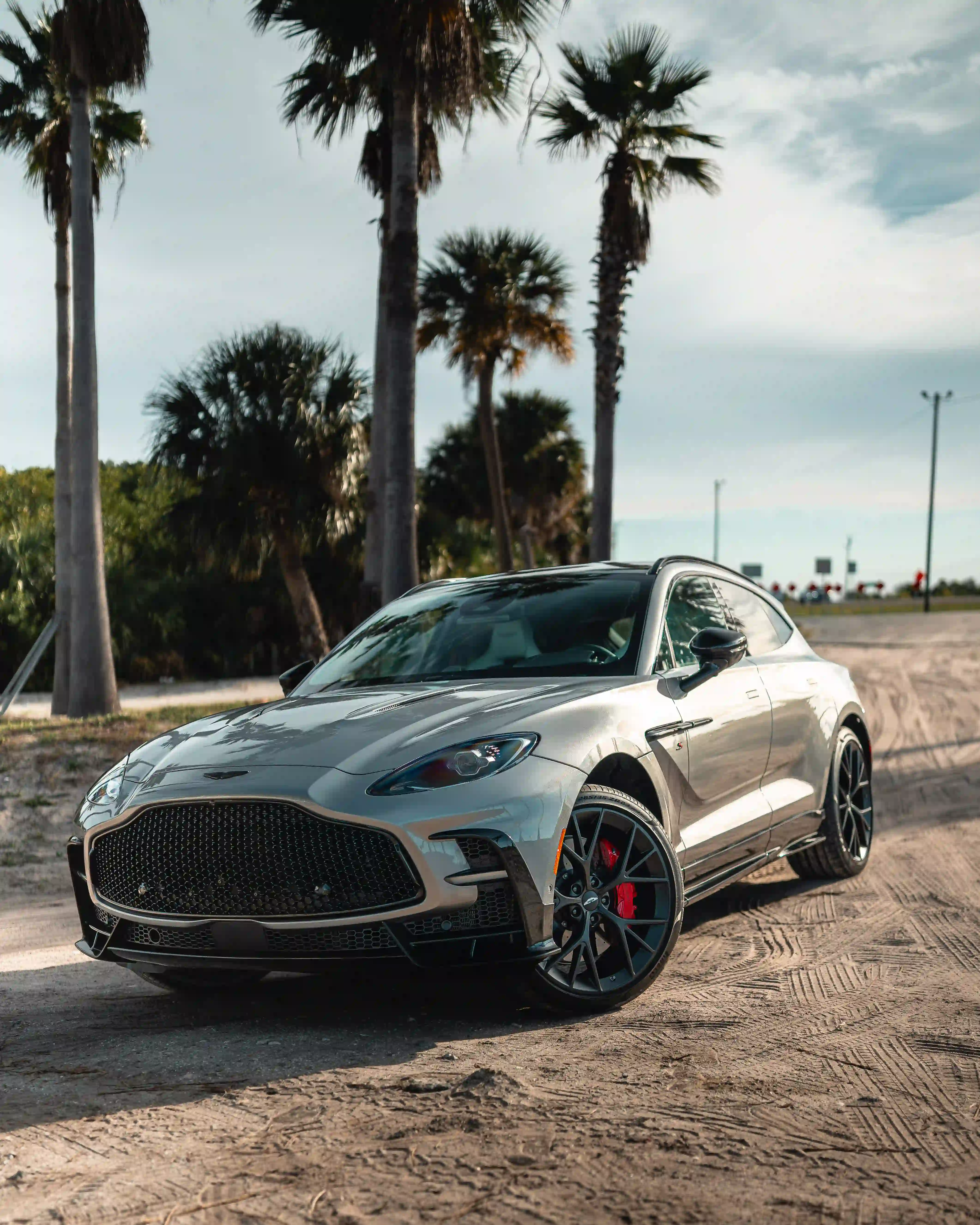
Heat is the single biggest variable in Gulf ownership. It works on three systems, and it is patient about all of them.
Cooling first. The DBX S carries more radiator area and more aggressive air management than the DBX707 because the extra output demands it, and the DBX707's own system is sized for the same climate. That system only performs as designed while the intake path stays clear, and in a climate that delivers dust as reliably as this one does, air filtration stops being a formality and becomes a service item worth caring about.
Fluids next. Engine oil, gearbox fluid and brake fluid all degrade faster under sustained heat than the odometer implies. This is exactly why intervals are set by time as well as by distance. A car that spends a Saudi summer covering almost no kilometres still needs servicing on schedule, and the owners who learn that expensively are the ones who assumed low mileage meant low wear.
Tyres last, and tyres are the quiet one. High ambient temperature raises running pressure and accelerates wear, and a tyre that is merely a little soft at 25 degrees is working genuinely hard at 48. Check pressures more often than the handbook assumes. It was not written with an August afternoon in Riyadh in mind.
All of this is routine, and all of it is handled at the official service centre. Work is carried out by Aston Martin certified service technicians, using genuine Aston Martin parts that carry a 12-month parts warranty, and every visit is added to a digitally updated service record that stays with the car.
More detail on schedules, parts and warranty sits on the Aston Martin service centre page.
How to see the DBX S at the authorised dealer
The Aston Martin DBX S is available in Saudi Arabia through the authorised dealer, alongside the full Aston Martin range in Saudi Arabia.
Standing next to the car settles things a specification sheet cannot. Whether the rear bench genuinely suits your family. How the 23-inch wheels ride on the roads you actually drive rather than the ones in the photographs. Which trim combination holds up in Saudi light, which is harsher and far more revealing than any showroom lighting rig. Availability, specification and current pricing all move, so those belong in a conversation with the dealer rather than on a page.
If a bespoke commission through Q by Aston Martin is of interest, raise it at the first appointment. Personalisation affects build slot and lead time, and starting the conversation early is the difference between getting the car you specified and compromising on it.
Next step: book a DBX S test drive
Book a test drive and take the car somewhere you already know. A familiar road will tell you more in twenty minutes than a specification sheet manages in a week, because you already know exactly what everything else feels like there. The sales team can confirm availability, walk through specification and options, and arrange a handover date. Book a test drive at the Aston Martin showroom, or call the sales team directly.
Aston Martin DBX S frequently asked questions
What is the difference between the Aston Martin DBX707 and the DBX S?
Both are versions of the Aston Martin DBX and both are current. The DBX707 produces 707 PS. The DBX S produces 727 PS, saves up to 47 kg through an optional carbon fibre roof and magnesium wheels, and adds a quad-stacked exhaust. Both seat five and share the same 638-litre luggage capacity, so the choice is one of character rather than of compromise.
Should I choose the DBX707 or the DBX S?
Both are available new through the authorised Aston Martin dealer in Saudi Arabia, and both are serviced and supplied with genuine parts through the official service centre. The DBX707 is the more discreet of the two and wants for nothing on specification. The DBX S is lighter, 20 PS more powerful and more vocal, and rewards an owner who does the driving themselves. Drive both before deciding.
How fast is the Aston Martin DBX S and how much power does it make?
The DBX S produces 727 PS and 900 Nm from its 4.0-litre twin-turbo V8. It reaches 100 km/h in 3.3 seconds and has a maximum speed of 310 km/h.
Is the DBX S available through the authorised dealer in Saudi Arabia?
Yes. The DBX S is available in Saudi Arabia through the authorised Aston Martin dealer. Availability and specification vary by build slot, so contact the showroom to confirm current cars and to discuss options and Q by Aston Martin personalisation.
Can the DBX S be serviced in Saudi Arabia?
Yes. Servicing is carried out at the official Aston Martin service centre by certified service technicians, using genuine parts that carry a 12-month parts warranty. Every visit is recorded in a digitally updated service record that stays with the car.