Aston Martin DB12 vs DB12 S: Which Super Tourer to Choose
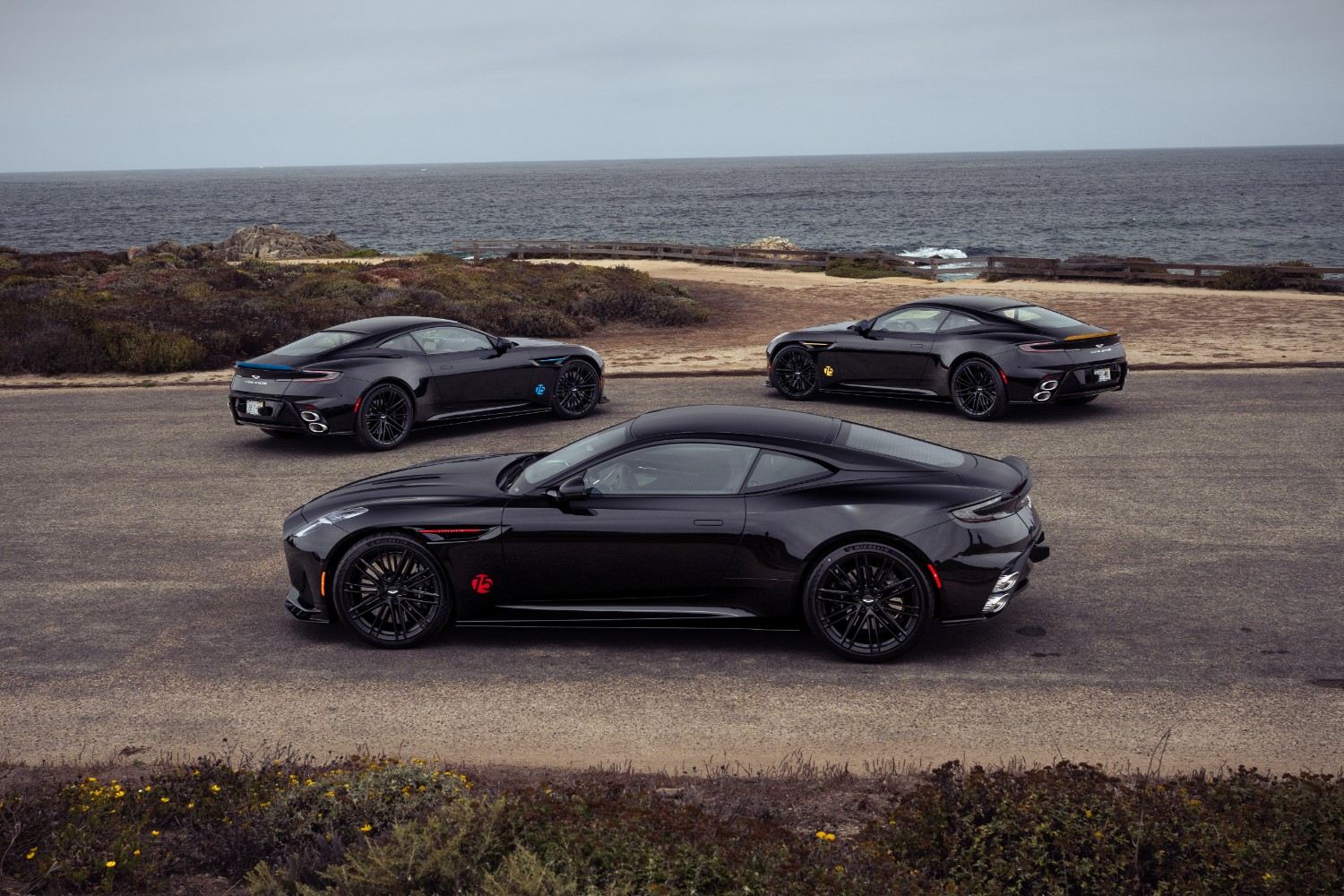
Table of Contents
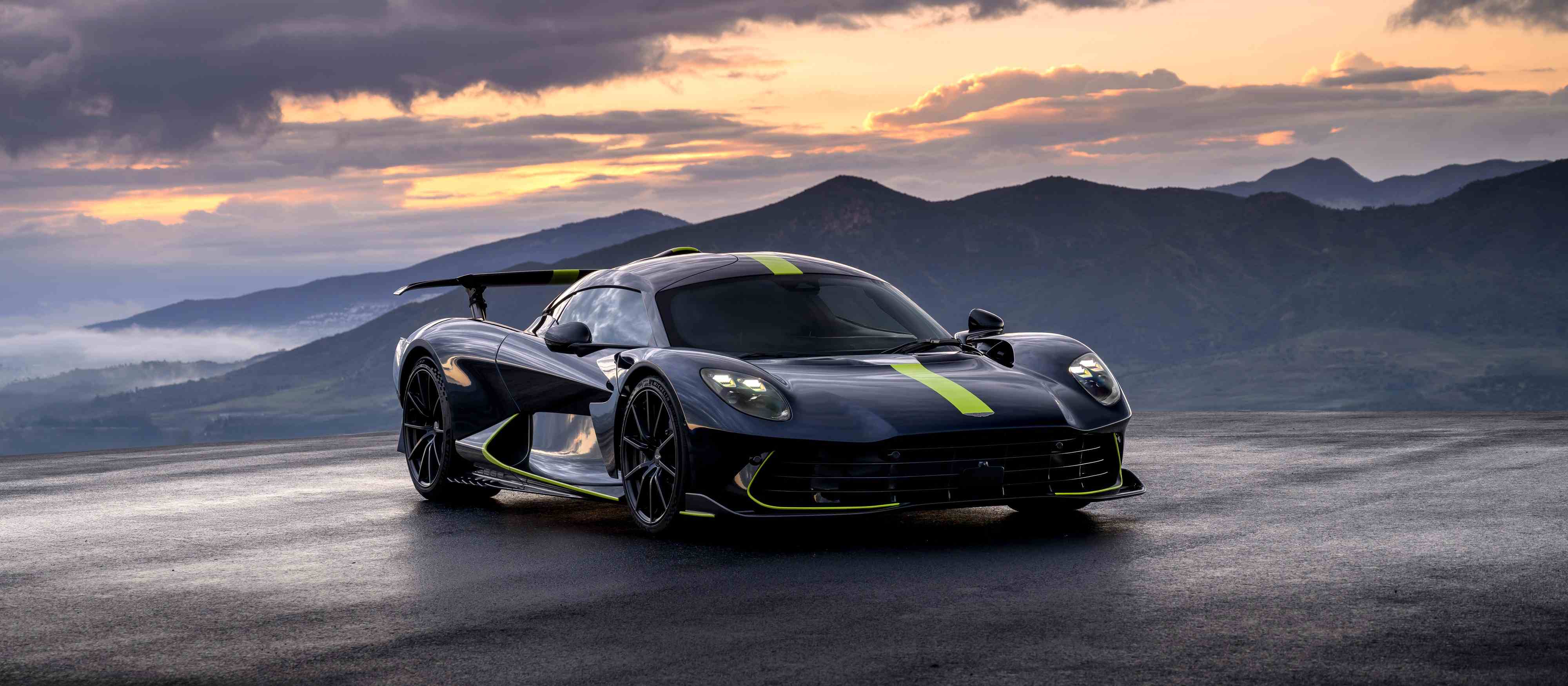
The Aston Martin DB12 S is the sharper-edged version of the DB12, not its replacement. It raises output to 700 PS against the DB12's 680 PS, shortens gearshift times by roughly 43%, and adds a firmer chassis calibration. Both cars carry the same 800 Nm and the same 325 km/h top speed, and both remain current in the 2026 range.
There is a moment, somewhere on the long northern run out of Riyadh when the traffic has thinned and the road has gone straight and the temperature gauge has settled, where these two cars stop being a specification sheet and become a genuine choice.
Up to that point they behave almost identically. Same 4.0-litre twin-turbo V8, same 800 Nm, same unhurried authority at a cruise. Then you ask for everything at once, and one of them answers a half-beat sooner and a good deal louder than the other.
That half-beat is the entire decision. This guide sets out where it comes from, what it costs you in daily comfort, and which of the two cars is the better companion for the way Saudi roads are actually driven. It is written by the authorised dealer, from cars we have sat in, started and handed over, rather than from a road test conducted somewhere considerably cooler than here.
What are the differences between the DB12 and DB12 S?
The Aston Martin DB12 S is a higher-output, more sharply calibrated version of the Aston Martin DB12, introduced in October 2025 for the 2026 model year. It produces 700 PS against the DB12's 680 PS, cuts gearshift times by roughly 43%, and firms the chassis and damper settings. Torque, top speed and body styles are unchanged, and both cars remain on sale.
The framing matters as much as the numbers. The S is not a facelift and the DB12 has not been superseded. Aston Martin now sells both, in Coupe and Volante form, to two different temperaments. One is the super tourer that happens to be ferociously quick. The other is the quick car that happens to be a super tourer. Everything below is really a way of working out which of those two sentences describes you.
Aston Martin DB12 S power and performance
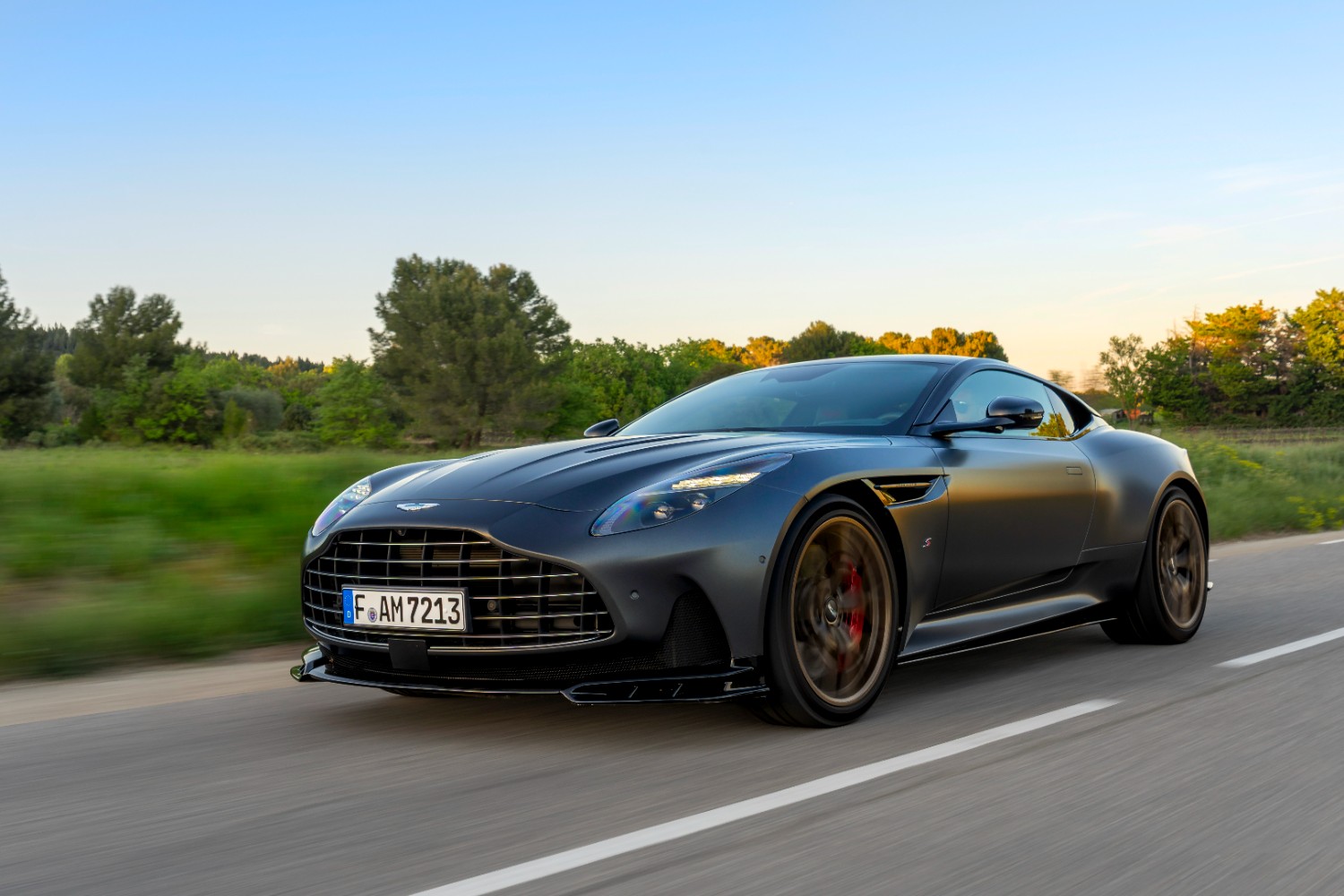
Both cars use the same 4.0-litre twin-turbocharged V8. In the DB12 it produces 680 PS, which is 671 bhp. In the DB12 S that rises to 700 PS, or 690 bhp. Torque is identical at 800 Nm across both cars, and so is the 325 km/h top speed.
Against the clock, the DB12 S Coupe covers 0 to 100 km/h in 3.5 seconds, with the Volante at 3.6 seconds. These are manufacturer-published figures for the 2026 model year.
Look at those numbers side by side and the honest conclusion is that 20 PS is not what you are buying. On a car already producing 680 PS, twenty more is a rounding error you will never identify from the driver's seat, and any comparison that leads with it is selling you a decimal place.
The change you will notice is the transmission. Shift times in the DB12 S are around 43% shorter than the standard car's. Put plainly, the gap between deciding and going has closed. The DB12 gathers itself and then delivers; the DB12 S simply delivers. It is a difference of manners rather than of capability, and it is felt constantly rather than occasionally, which is precisely why it matters more than the power figure does.
What the extra output changes on the road
In practice, almost nothing at a cruise and a great deal at the moment of commitment.
At 120 km/h on an open highway, in top gear, with the air conditioning working hard, the two cars are indistinguishable. Both have enormous reserves. Neither is working.
The difference arrives in the overtake. You are behind a slow-moving truck on a single carriageway, the oncoming lane clears, and you go. In the DB12 there is a breath, barely perceptible, while the gearbox selects and the turbos spool up. In the DB12 S that breath is largely gone. The car is already in the gear and already pulling before the thought has finished forming.
On a mountain road, the Jabal Sawda descent towards Abha for instance, where the corners arrive in quick succession and you are shifting constantly rather than holding a gear, that shortened response compounds. Twenty corners in, the S feels appreciably more alert. The DB12 feels more relaxed. Neither of those is the wrong answer; they are simply answers to different questions.
How the DB12 S chassis is set up differently
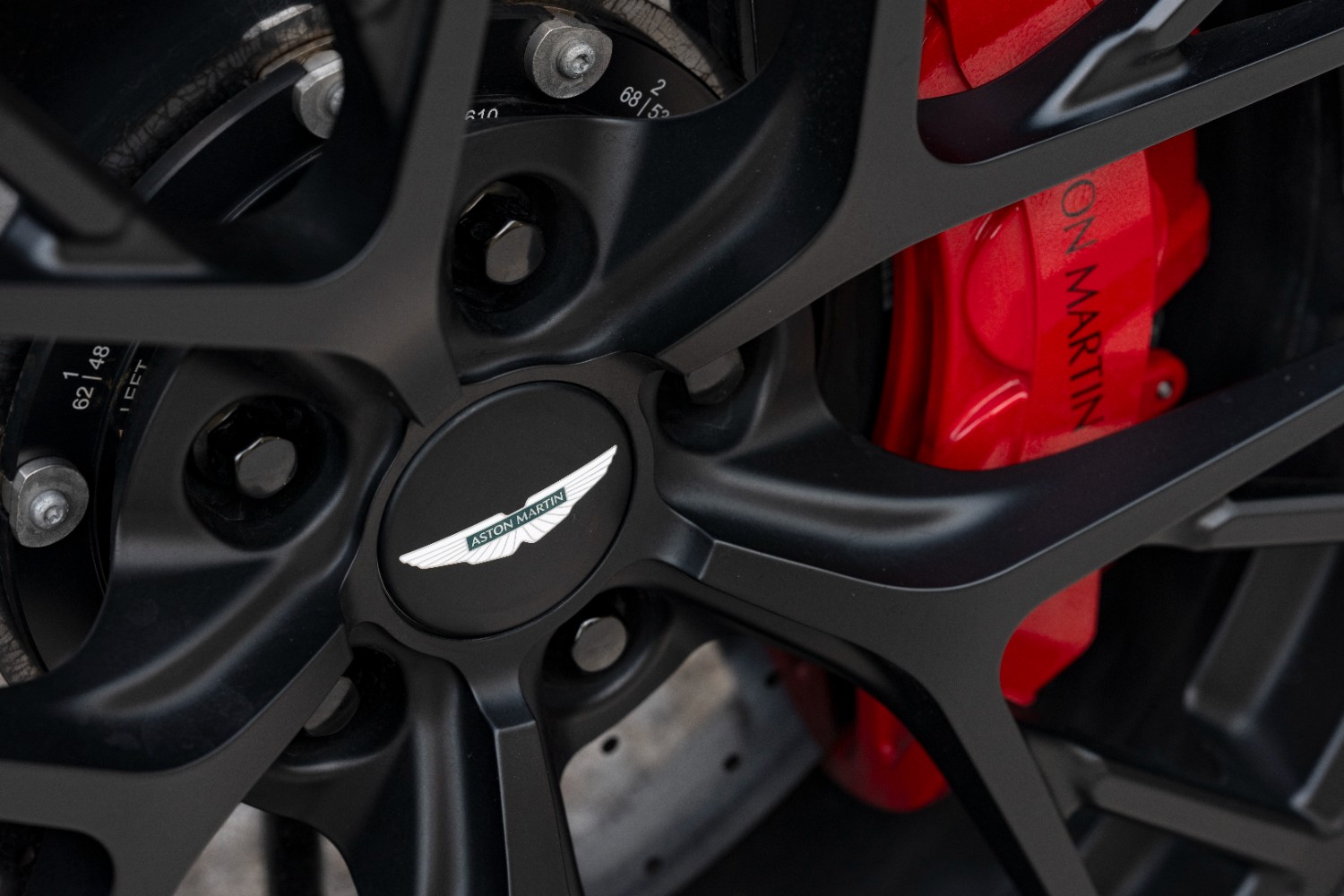
The mechanical package underneath is shared, and the changes are to calibration rather than to architecture.
The DB12 S runs firmer damper settings and a chassis tune shifted towards body control. The standard DB12 is set up to absorb; the S is set up to resist. On a smooth surface this reads as precision, with less movement over crests and a flatter attitude through a long fast curve. The car settles sooner after an input and stays settled.
On a broken surface it reads as firmness, and this is where a Saudi buyer should pay closer attention than a European one. A ride calibration tuned on smooth, cold, well-maintained roads behaves differently on hot, expansion-jointed, heavily trafficked ones. On the older concrete sections of an urban ring road, with their regular transverse joints, the S transmits more of the surface into the cabin than the DB12 does.
Whether that matters depends entirely on your commute. Over an hour of open highway it is irrelevant. Over forty minutes of city traffic twice a day it is the single thing you will notice most about the car, and it is not something a specification sheet can tell you. It is something you find out on a test drive, ideally on a road you actually use.
Tip: drive both cars back to back on your own regular route, not on the dealer's demonstration loop. The difference between the two chassis calibrations is far clearer over a familiar surface than an unfamiliar one.
How the DB12 S sounds and feels inside
The DB12 S is offered with an optional titanium exhaust system, and it changes the character of the car more than any other single item on the options list.
It is worth being specific about what it actually does, because "a better soundtrack" tells you nothing. The standard DB12 has a deep, rounded, slightly distant V8 voice: present under load, civil at a cruise, always a little bit filtered. The titanium system strips much of that filtering away. The tone moves higher and drier, hardens as the revs rise, and gains a crisper edge on the overrun as you lift for a junction. At low speed in an underground car park it is noticeably more theatrical, which is either exactly what you wanted or precisely what you were trying to avoid.
Optional carbon fibre body elements are also available on the S, and these are visual rather than acoustic.
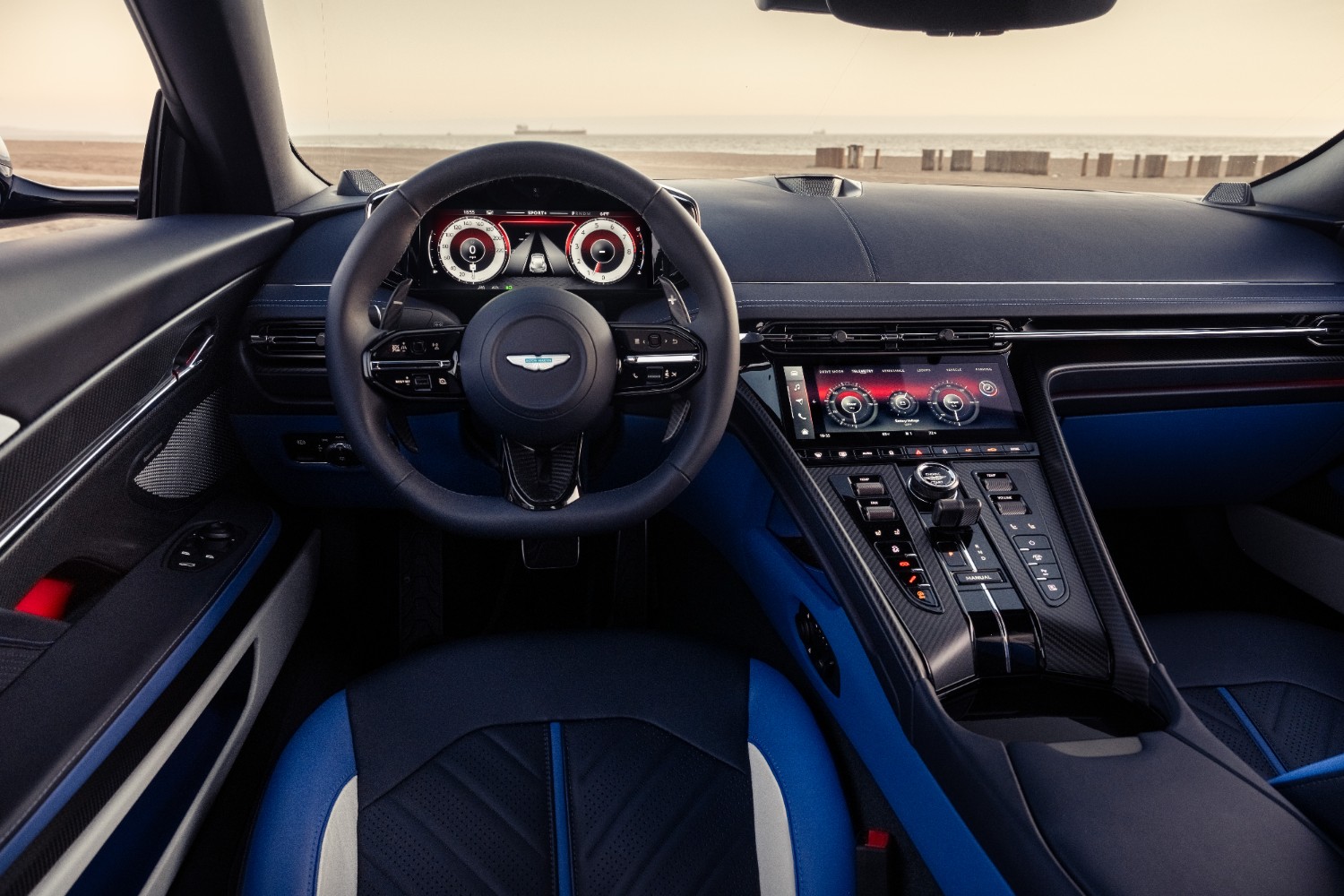
Inside, the two cars are close. The cabin architecture, the screens, the switchgear and the general sense of a properly finished interior carry over unchanged. The S offers sportier trim and material choices, but nobody sitting in the passenger seat is going to identify which car they are in from the dashboard. They will identify it from the noise.
How the DB12 and DB12 S compare side by side
Every figure below is manufacturer-published for the 2026 model year.
| Aston Martin DB12 | Aston Martin DB12 S | |
|---|---|---|
| Position in the range | Super Tourer | Sharper-calibrated Super Tourer |
| Engine | 4.0-litre twin-turbo V8 | 4.0-litre twin-turbo V8 |
| Power | 680 PS (671 bhp) | 700 PS (690 bhp) |
| Torque | 800 Nm | 800 Nm |
| 0 to 100 km/h | 3.6 s Coupe, 3.7 s Volante | 3.5 s Coupe, 3.6 s Volante |
| Top speed | 325 km/h | 325 km/h |
| Gearshift response | Standard calibration | Shift times around 43% shorter |
| Chassis | Tuned towards absorption | Tuned towards body control |
| Body styles | Coupe and Volante | Coupe and Volante |
| Signature options | Standard specification | Titanium exhaust, carbon fibre body elements |
| Introduced | May 2023 | October 2025, for the 2026 model year |
| Status in the 2026 range | Current | Current |
*Source: Aston Martin published specifications, 2026 model year. Saudi market specifications may vary, so please confirm details with the dealer.*
Read across that table and the shape of the decision becomes clear. Apart from the launch date, only three rows separate the cars: shift response, chassis calibration and the options that change how the car sounds. You are not choosing between a fast car and a faster one. You are choosing between two settings of the same car's temperament.
Which car suits Saudi roads and Saudi summer?
This is the section no overseas review can write for you, so here is what our service department actually sees.
Heat is the first consideration, and it is less dramatic than people expect. Both cars are engineered for high ambient temperatures and both are used through Saudi summers without difficulty. The V8 and its cooling package are common to both, so there is no thermal argument for choosing one over the other. What matters far more than the badge is specification: the interior trim and glass you choose, and whether the car spends its afternoons in shade.
Surface is the second, and here the cars genuinely diverge. Saudi driving tends to be long, fast and straight, punctuated by dense, slow, hot urban traffic. The DB12's softer calibration is the better fit for that profile more often than enthusiasts like to admit. If most of your kilometres are Riyadh to Qassim with the cruise control set, the standard car will be the more comfortable companion and you will not once wish for a shorter shift time.
The S earns its keep on a different road. If your driving includes the Taif escarpment, the Sarawat passes, or any regular route with real corners, the sharper chassis and the shortened shifts stop being specification and start being the reason you took the long way home.
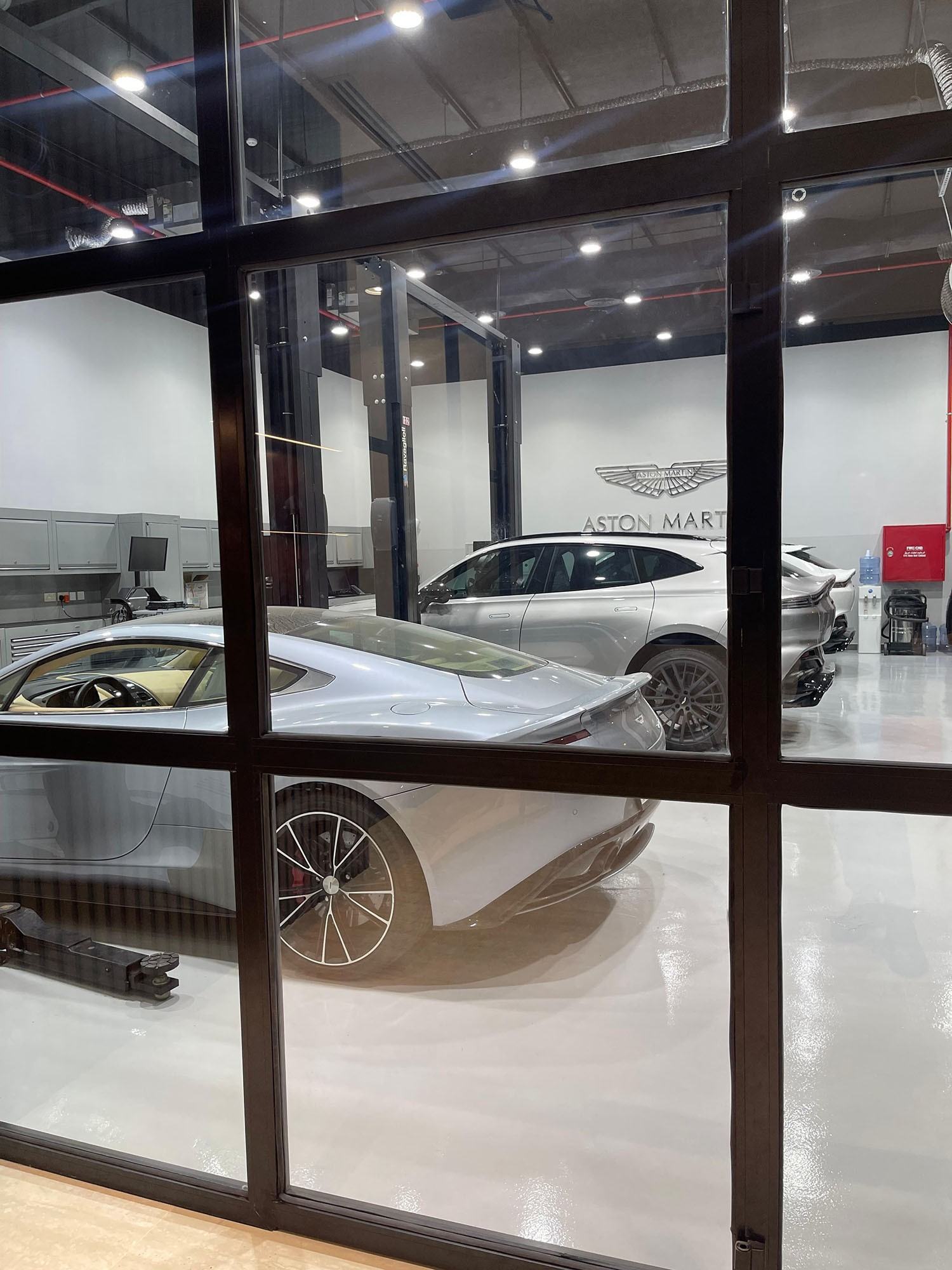
Dust protection and servicing intervals are identical across both cars. Whichever you choose, Aston Martin servicing in the Kingdom is carried out by Aston Martin certified technicians using genuine parts, with the service record updated digitally.
Specifying your DB12 or DB12 S before you order
Some decisions are reversible and some are not. Treat the following as the ones to get right at order, because retrofitting them later ranges from expensive to impossible:
- Exhaust system. On the S, the titanium option changes the car's voice permanently. Hear both before deciding, ideally in an enclosed space rather than outdoors.
- Carbon fibre body elements. Specified at build. Adding them afterwards is far more involved.
- Body style. Coupe or Volante is a structural decision, not a trim one.
- Interior materials and glass. These shape how the cabin handles heat and light far more than most buyers expect at the point of order.
- Wheel and brake specification. Confirm the full local specification with the dealer, as this is an area where markets differ.
A useful sequence: settle the body style, then the chassis you want to live with, then the sound, then the colour. Most people do it in exactly the reverse order and then spend the delivery wait wondering about the exhaust.
Buying a DB12 or DB12 S through the authorised dealer
Both cars are ordered through the authorised Aston Martin dealer in Saudi Arabia, and both are built to your specification with a factory allocation and a lead time attached.
If the comparison has pointed you towards the standard car, it is worth reading our guide to buying a DB12 new or pre-owned before you order, since the pre-owned route exists for the DB12 in a way it does not yet for the S. The S has only been on sale for about a year, so pre-owned examples are still very rare. If the S is the car you want, you are ordering new.
You can also see where both sit among the Aston Martin models sold in Saudi Arabia if you are not yet certain the DB range is the right family at all.
Next step: arrange a viewing with the dealer
Specification sheets will not settle this one. Sit in both cars, start both cars, and drive them on a road you know.
Arrange a viewing at the showroom and our sales team will confirm current availability, local specification and lead times for both the DB12 and the DB12 S super tourer.
Aston Martin DB12 S frequently asked questions
What is the difference between the Aston Martin DB12 and the DB12 S?
The DB12 S produces 700 PS against the DB12's 680 PS, shortens gearshift times by roughly 43%, and uses a firmer chassis and damper calibration. Torque, top speed and body styles are identical. Both cars remain current in the 2026 range, positioned for different temperaments rather than ranked.
How much more power does the DB12 S have than the DB12?
The DB12 S produces 700 PS, or 690 bhp, against 680 PS, or 671 bhp, for the standard DB12. That is 20 PS more. Torque is unchanged at 800 Nm on both cars, and both share the same 325 km/h top speed.
Is the Aston Martin DB12 S available to order in Saudi Arabia?
Yes. The DB12 S can be ordered through the authorised Aston Martin dealer in the Kingdom, and each car is built to the buyer's own specification. Contact the showroom to confirm which body styles are offered locally and the current lead time.
Does the DB12 S share the DB12's interior and technology?
Yes. The cabin architecture, screens, switchgear and core technology carry over from the DB12. The S adds sportier trim and material options, and offers carbon fibre body elements and a titanium exhaust system, but the interior layout and equipment are shared between the two cars.
Where can I see an Aston Martin DB12 S in Saudi Arabia?
Both cars can be viewed at the authorised Aston Martin showroom, where the sales team can confirm current specification and availability. Contact the dealer to arrange a viewing, and ask to drive the DB12 and DB12 S back to back, as the difference is easier to feel than to read.